


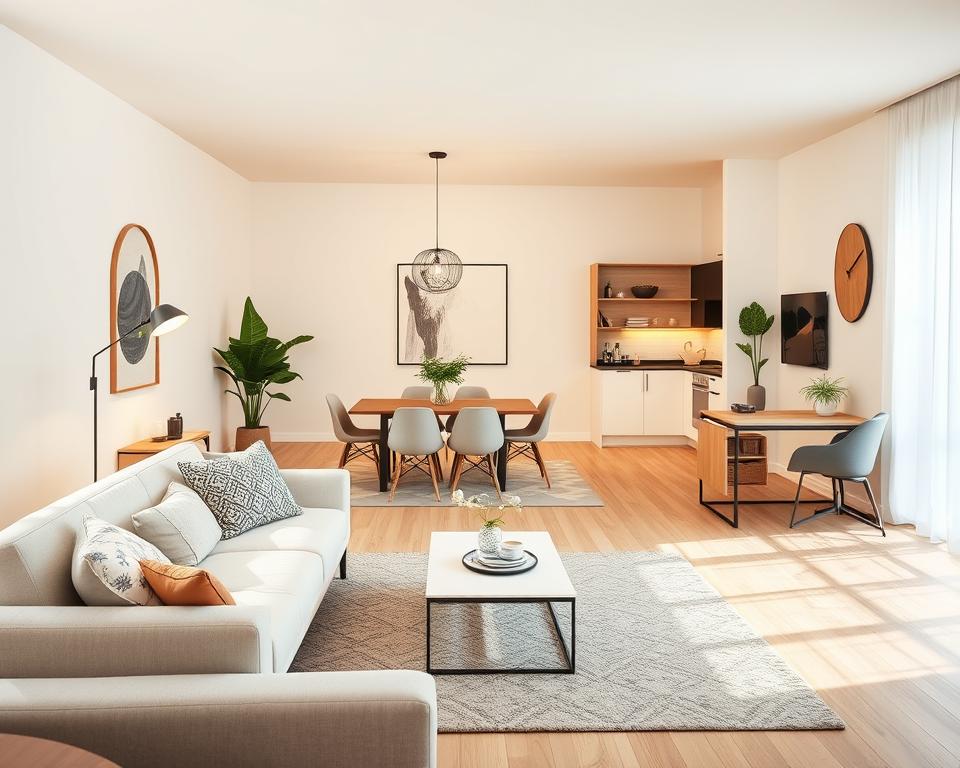
Did you know a well-designed home can boost its value by up to 10%? One great way to make your home better is by using room zoning ideas. These ideas help create different areas for various activities.
Dividing a large open-plan area into zones can really make your home look and feel better. It makes your living space more organized and peaceful.
Good room layout design is key to a harmonious and useful home. In this article, I’ll share useful tips and examples. They’ll help you set up different zones in your home.
Key Takeaways
- Create separate areas for different activities to enhance functionality.
- Use furniture and decor to define different zones.
- Consider the flow of traffic when designing your room layout.
- Maximize natural light to create a more welcoming atmosphere.
- Invest in multi-functional furniture to optimize space.
Understanding Room Zoning and Its Benefits
Room zoning is key to a tidy and cozy home. It means dividing your house into areas for different activities. This makes your home both useful and beautiful.
What is Room Zoning?
Room zoning is a design trick to make separate spots in one big area. For example, in a big living room, you can have zones for sitting, eating, and cooking. This way, your home becomes more organized and easy to move around in. Effective room zoning also cuts down on mess and makes your home flow better.
Key Benefits of Zoning Spaces
Room zoning has many perks. It’s great for small homes or apartments because it uses space well. It also makes your home look better by adding unique areas. Plus, it makes your home work better by separating spaces for different things.
- Create separate areas for different activities
- Enhance the aesthetic appeal of your home
- Improve the functionality of your living space
How It Enhances My Home’s Functionality
Room zoning has changed my home for the better. It lets me use my space for different things. For instance, I have a special area for working from home, which boosts my productivity. It also cuts down on mess and makes my home feel calmer.
| Zoning Technique | Benefit | Example |
|---|---|---|
| Using Rugs and Textiles | Defines different zones | Placing a rug under the dining table |
| Furniture Arrangement | Creates separate areas | Arranging sofas to create a lounge area |
| Visual Dividers | Separates spaces without walls | Using a screen to divide a room |
Using these room zoning tricks, you can make your home more useful, organized, and pretty. Whether you want to make your home better or just more welcoming, room zoning is a smart choice.
Creative Ways to Zone Open Floor Plans
Zoning open floor plans needs creativity and careful planning. These layouts are loved for their openness and flexibility. Yet, they can be tricky to divide for different activities.
Use of Rugs and Textiles
Rugs and textiles are great for making zones in open floor plans. A well-placed rug can mark a spot, like a living room or dining area, and warm up the floor. Throw pillows and blankets can also set zones apart with their colors and textures.
Furniture Arrangement Techniques
How you arrange furniture can also zone open floor plans. By setting up furniture to make separate spots for talking or working, you can separate areas without walls. For instance, a sofa can act as a divider between a living space and a home office.
Visual Dividers Like Screens
Visual dividers, like screens or room dividers, are a flexible way to zone open floor plans. These can be moved easily and add style to the room. Screens can also hide mess or provide privacy in some spots.
Using these creative zoning methods, homeowners can keep the openness of their floor plans. They can also maintain the look and function of different areas.
Utilizing Color for Zoning
Color is a great way to zone a room. It makes the space more functional and looks better. By picking the right colors, you can make different areas in a room stand out.
Choosing Color Palettes for Different Zones
When picking colors for zones, think about what each area is for. A workspace might need bright colors like orange or yellow to keep you focused. But a spot for relaxing could have calming colors like blue or green.
- Choose colors that fit your home’s style.
- Think about the natural light in each area and how it changes the color.
- Use a common color to connect different zones.
Accent Walls as Dividers
Accent walls can divide zones well. Paint one wall a bold color to separate areas in an open-plan space. This adds interest and defines different areas.
Tips for using accent walls:
- Paint a wall that naturally catches your eye, like one behind a fireplace or a staircase.
- Pick a color that stands out but also goes with the room’s colors.
- Make sure the accent wall fits with the room’s furniture and decor.
Impact of Light and Dark Colors
Light and dark colors change how a room feels. Light colors make a room seem bigger and airier. Dark colors make it cozy and intimate.
For example: In a big, open-plan living area, light colors on walls keep it feeling open. But, use dark colors in a reading nook to make it cozy.
Using color wisely can make your living space more organized and beautiful. Whether it’s picking the right colors, using accent walls, or knowing how light and dark colors work, color is a powerful tool for room zoning.
Incorporating Furniture for Effective Zoning
Furniture is key in setting up different zones in a room, making it more useful. By picking and placing furniture wisely, you can make areas for different activities. This makes your living area more organized and enjoyable.

Multi-functional Furniture Solutions
Using furniture that does more than one thing is a smart way to zone a room. Items like storage ottomans, sofa beds, and coffee tables with storage help keep things tidy. For example, a storage ottoman can be a footrest, extra seat, and storage all at once.
For more ideas on using furniture to create different spaces, check out this resource. It offers great tips for making the most of your open-floor plan home.
Bookshelves as Room Partitions
Bookshelves are not just for books; they can also divide rooms. A tall bookshelf can separate areas like a living space from a workspace. It lets natural light flow and doesn’t make the room feel small. You can also use them to show off your favorite items, adding a personal touch.
Unique Furniture Arrangements That Work
How you arrange furniture is important for creating different zones. For instance, setting a sofa to face a dining area can define the living space. Using a console table behind a sofa can also separate the living and dining areas. Try out different setups to find what works best for you.
By using these furniture strategies, you can make your rooms more functional and attractive. Whether you have an open-plan area or a smaller, more divided space, the right furniture can make a big difference.
Natural Elements in Room Zoning
Natural elements are key in making a home both beautiful and practical. Using plants, natural light, and water features can make your home feel better and work better.
Plants are a simple way to divide a room. They bring nature inside and help mark off different spaces in an open area.
Using Plants to Create Boundaries
Plants are great for zoning a room. Tall plants can act as natural walls, while small ones can group together to separate areas.
Tips for using plants:
- Choose plants that do well indoors and don’t need much care.
- Use different sizes and styles of planters to make things interesting.
- Think about how big the plants will get to avoid overcrowding.
Natural Light and Its Effects
Natural light is also a powerful tool for zoning. Mirrors and sheer curtains can help bring in more light, making your home brighter and more inviting.
The benefits of natural light include:
- It makes you feel better and reduces eye strain.
- It makes your home look bigger and more open.
- It reduces the need for artificial light.
Water Features for Tranquility
Adding water features, like a small fountain or aquarium, can make your home feel calm. It creates a peaceful space that encourages relaxation.
Ideas for water features:
- A wall-mounted fountain can be a calming centerpiece.
- A tabletop fountain can bring peace to dining or living areas.
- An aquarium can bring the beauty of the sea inside.
By using these natural elements, you can make your home more peaceful and practical. It will meet your needs and improve your well-being.
Innovative Zoning with Lighting
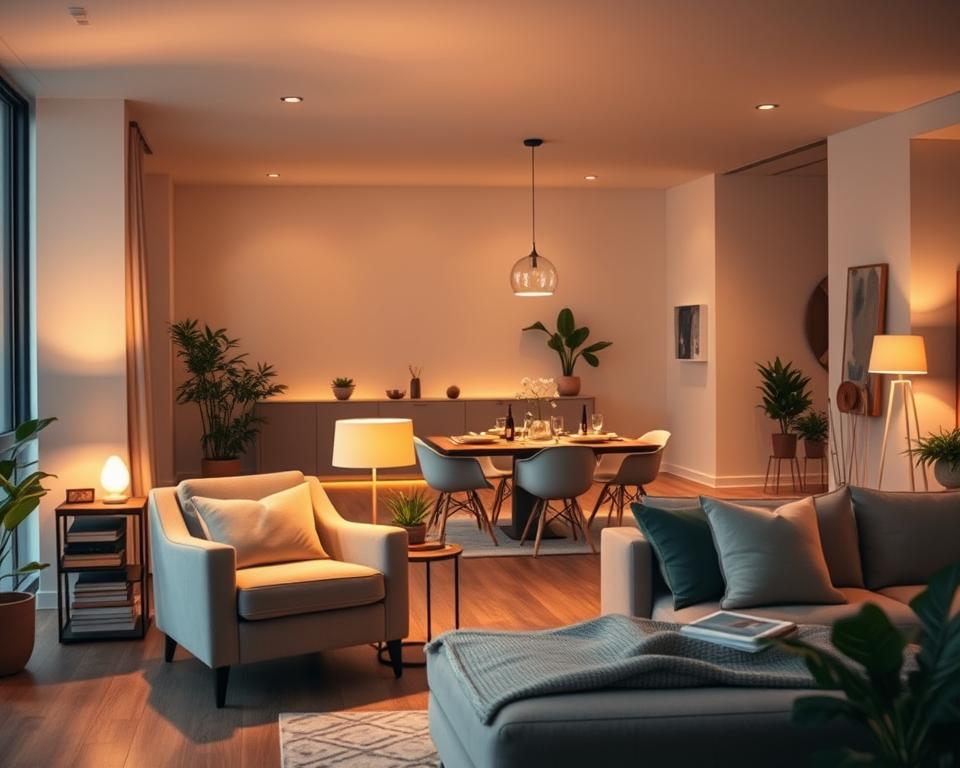
Lighting is a key way to zone a room. It changes the feel and use of a space, making it essential for creative room zoning. Different lighting setups can turn one room into many areas, improving its functional space organization.
Layered Lighting Techniques
Layered lighting mixes different light sources for a great look and function. It includes ambient, task, and accent lighting. Ambient lights the whole room, task lights focus on work areas, and accent lights highlight special features.
In an open-plan living area, ambient lights the whole space. Task lights are used in the kitchen or for reading. Accent lights make artwork or features stand out, adding depth and interest.
Using Floor and Table Lamps
Floor and table lamps are great for cozy zones. They can light up reading spots or create a warm glow in seating areas. There are many styles to match any decor.
For example, a floor lamp behind a sofa makes a cozy reading nook. Table lamps on a console table add soft, ambient light, defining the area.
“The right lighting can make a room feel cozy, inviting, and utterly unique.” –
Creative Pendant and Wall Sconces
Pendant and wall sconces add to room zoning. Pendant lights mark kitchen or dining areas. Wall sconces add light to various spots. There are many styles to fit any theme.
Pendant lights over a kitchen island highlight the cooking area. Wall sconces in hallways or corridors provide warm, welcoming light.
Using these lighting ideas, homeowners can organize their space better and make it more enjoyable. This leads to functional space organization and creative room zoning.
Personal Touches in Zoning
Adding personal touches can make your zoned spaces truly yours. By using elements that show your personality, interests, and experiences, your home becomes more than just a place. It becomes a space that feels welcoming and personal.
Custom Art and Decor Choices
Custom art and decor are great ways to add a personal touch. Choosing pieces that speak to you can make your space feel cohesive and meaningful.
For example, you might pick artwork that shows your hobbies or colors that match your furniture. Open-concept zoning benefits from thoughtful decor, helping to define areas within the space.
“The right artwork can completely transform a room, making it feel more personalized and welcoming.”
Personalizing Spaces with Family Items
Adding family items to your zoning design is another way to make it personal. Heirlooms, family photos, or antique furniture can add warmth and character.
Displaying cherished items on shelves or in display cases can create focal points. This personalizes the space and encourages conversations and connections.
DIY Projects for Unique Zones
DIY projects are a great way to make unique zones that show your creativity and style. You can craft decorative items or repurpose furniture, opening up endless possibilities.
For instance, you could make a gallery wall with family photos or artwork. Or, you might turn an old piece of furniture into a room divider or statement piece.
| Personal Touch | Description | Example |
|---|---|---|
| Custom Art | Artwork that reflects personal style or interests | Commissioned painting or personalized prints |
| Family Items | Heirlooms or personal items displayed in the space | Antique furniture or family photos |
| DIY Projects | Handmade or repurposed items that add uniqueness | Repurposed furniture or handmade decor |
By adding these personal touches, you can make your zoned spaces functional and deeply personal. They will reflect your identity and make your home truly yours.
Zoning Ideas for Different Rooms
Different rooms have unique needs. Zoning can tailor each space to its purpose. This makes your home more functional and comfortable.
When thinking about open floor plan solutions, it’s key to separate areas without losing openness. Furniture arrangement can help define zones.
Living Room Zoning Concepts
In living rooms, zoning creates areas for relaxation, entertainment, and socializing. A sectional sofa can separate a seating area from a reading nook.
- Use rugs to define different zones within the room.
- Employ lighting to create ambiance in different areas.
- Incorporate plants or screens to visually separate spaces.
Kitchen and Dining Area Separation
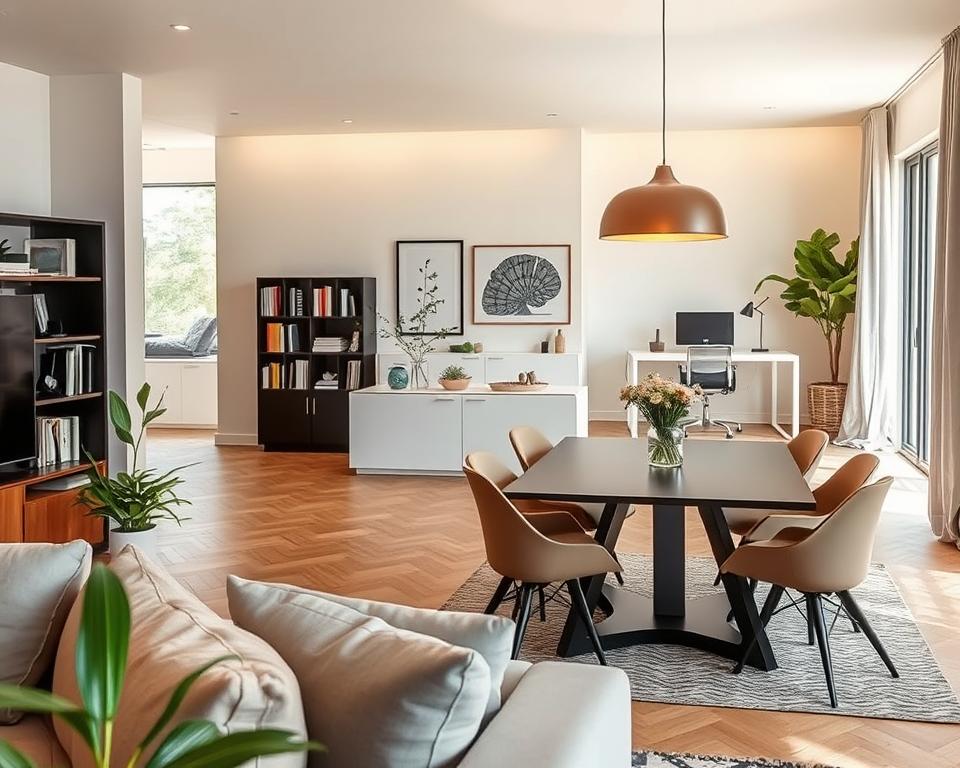
For kitchens and dining areas, room separation ideas include using islands or peninsulas. This creates a divide and adds counter space and storage.
Other strategies include:
- Using different flooring materials to distinguish between the kitchen and dining areas.
- Installing a room divider or a partial wall.
- Employing pendant lighting above the dining table to create a focal point.
Bedroom Zones for Rest and Relaxation
In bedrooms, zoning creates a peaceful retreat. It involves designating areas for sleeping, reading, and relaxation.
Some effective strategies include:
- Using a canopy bed or curtains to create a cozy sleeping area.
- Incorporating a comfortable reading nook with a chair and a floor lamp.
- Employing calming colors and textures to promote relaxation.
By applying these zoning strategies, you can make your home more enjoyable. It becomes a place where you can relax and feel comfortable.
Final Thoughts on Room Zoning
Exploring room zoning has shown me that a beautiful and functional living space is possible. By using the strategies from this article, homeowners can improve their room layouts. They can also make their spaces more organized and functional.
Practical Techniques for Effective Zoning
My top picks for zoning include furniture arrangement, color choices, and lighting. For example, using area rugs to mark zones, picking unique colors for each area, and adjusting lighting can change a room’s feel.
Transforming My Space
Using these zoning methods, I’ve made my living area more organized and attractive. It’s now easier to relax, work, and have guests over.
Encouragement to Try Zoning
I urge you to try zoning at home. Experiment with different methods to see what suits your space and lifestyle. With creativity, you can make your living area more functional, organized, and beautiful.