


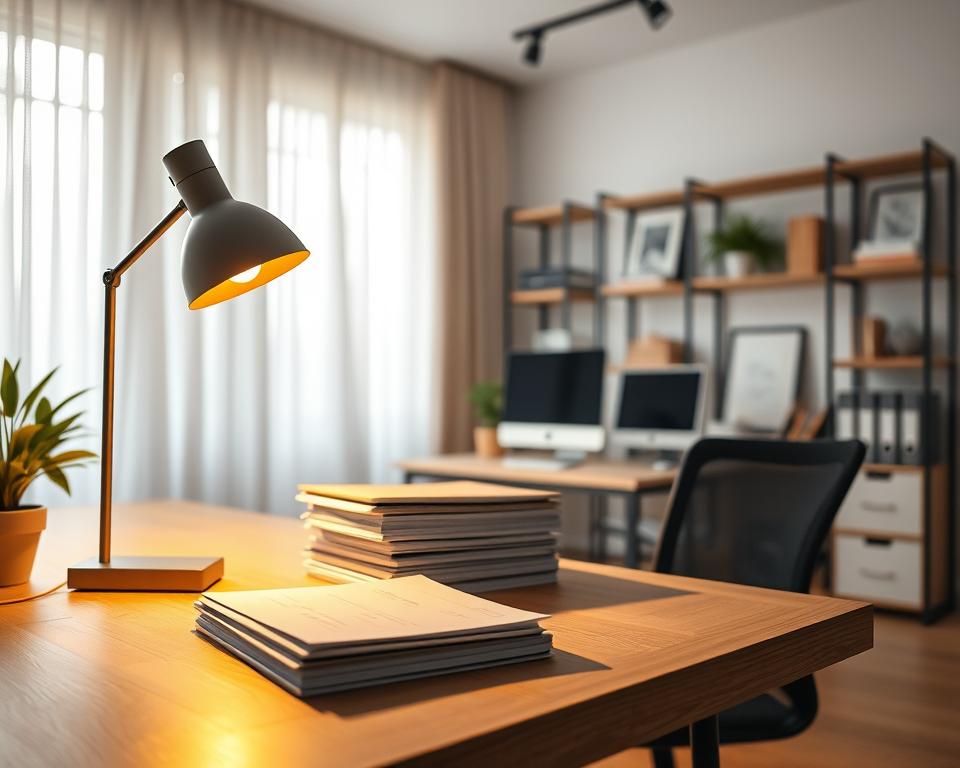
A well-designed workspace can really boost your productivity. But, one key element is often missed: proper lighting. As I sit at my desk, I realize how important the right illumination is for my work.
Many employees suffer from eye strain and fatigue because of bad workspace lighting. In this article, I’ll show you how to set up an optimal Office lighting setup. This will help you be more creative and efficient.
Key Takeaways
- Understand the importance of proper workspace illumination
- Learn about different types of lighting for your workspace
- Discover how to create a balanced lighting setup
- Improve your productivity with the right lighting
- Transform your workspace into a haven for creativity
The Importance of Office Lighting for Productivity
The right lighting in my office can really change how I feel and work. It can make me more focused and energetic. We’ll look at how lighting affects my mood, focus, and energy use.
How Lighting Affects My Mood
Lighting greatly affects my mood. Bright and natural light makes me feel better and less stressed. But, dim or harsh light can make me uncomfortable and irritable.
Studies show that light can change how our brain makes serotonin, which is key for our mood.
“Light therapy has been used to treat Seasonal Affective Disorder (SAD), demonstrating the significant impact of lighting on mental health.”
By picking the right lighting, I can make my workspace more positive and uplifting.
The Impact of Lighting on Focus
Good lighting is also key for staying focused. Task lighting helps me concentrate on specific tasks without eye strain. A well-lit area keeps me on track and away from distractions.
- Task lighting helps in focusing on specific tasks.
- Ambient lighting sets the overall tone of the workspace.
- Accent lighting highlights important features or areas.
Maximizing Energy Efficiency
Energy efficiency is also important in office lighting. Using LED bulbs and smart lighting systems cuts down energy use. LEDs use much less energy and last longer than old bulbs.
| Lighting Type | Energy Consumption | Lifespan |
|---|---|---|
| Incandescent Bulbs | High | 1,000 – 2,000 hours |
| LED Bulbs | Low | 25,000 – 50,000 hours |
Choosing energy-efficient lighting helps the planet and saves money on bills.
Types of Office Lighting to Consider
Effective office lighting design mixes different types for the best effect. When picking lighting for my office, I think about how it will improve both function and feel. It’s all about creating a space that’s both useful and welcoming.
Ambient Lighting Options
Ambient lighting lights up the whole office. It’s key for a comfy setting. Here are some top picks for ambient lighting:
- Ceiling-mounted fixtures: Great for overall lighting, they can be hidden or seen.
- LED panels: Energy-saving and sleek, LED panels are a modern pick for ambient light.
Choosing ambient lighting, I look at my office size and light color. Cool light helps focus, while warm light makes it cozy.

Task Lighting Choices
Task lighting shines on specific areas for work. It cuts down eye strain and boosts work speed. Here are some top task lighting picks:
- Desk lamps: Adjustable and focused, desk lamps are ideal for workspaces.
- Under-cabinet lighting: Great for offices with shelves, it lights up where needed.
Task lighting is key for detailed work areas. It gives the right light without overdoing it.
Accent Lighting Ideas
Accent lighting highlights special features or areas in the office, like art or design elements. Here are some creative accent lighting ideas:
- Track lighting: Flexible, it shines light on different points of interest.
- Picture lights: Made to spotlight specific art or decor.
Accent lighting adds depth and interest to my office. It makes the space more inviting and personal.
Choosing the Right Light Fixtures for My Space
To make my workspace better, I need to pick light fixtures that are both stylish and useful. The right lighting can change how my office feels and how well I work. There are many options, so it’s key to know about bulb types, choosing fixtures that match my style, and the perks of dimmers.
Understanding Different Bulb Types
The bulb type I choose can really change my office lighting. There are LEDs, incandescent, and fluorescent bulbs. LEDs save energy and last a long time, making them great for modern offices. Incandescent bulbs give a warm light but use more energy. Fluorescent bulbs offer a good mix of energy savings and light quality.
| Bulb Type | Energy Efficiency | Lifespan | Light Quality |
|---|---|---|---|
| LED | High | Long | Bright, Cool |
| Incandescent | Low | Short | Warm, Yellow |
| Fluorescent | Medium | Medium | Cool, Bright |
Selecting Fixtures That Fit My Aesthetic
The look of my light fixtures can really change my office’s vibe. Whether I like modern or traditional, there’s something for everyone. I can pick from materials like metal, glass, or wood to match my decor. For a modern office lighting vibe, sleek and simple fixtures are best.
Dimmers: A Simple Upgrade
Adding dimmers is a smart way to improve my office lighting. Dimmers let me change the light levels, making my workspace more flexible and comfy. This is super helpful for tasks that need different lighting levels. With dimmers, I can get the perfect light for any task, making my office more welcoming and useful.
By knowing about bulb types, picking fixtures that match my style, and adding dimmers, I can make a bright and inviting workspace. This will help me work better and feel more comfortable.
Natural Light vs. Artificial Light
Finding the right mix of natural and artificial lighting is essential for a great workspace. Both types offer unique advantages.
Benefits of Natural Light in My Office
Natural light makes me feel better and more productive. It helps my body keep a natural day-night cycle, which is good for my health. Plus, it makes my office feel more open and friendly.
Enhancing Productivity with natural light means I work better and faster. It’s not just about looking good; it’s also good for my health and work quality.
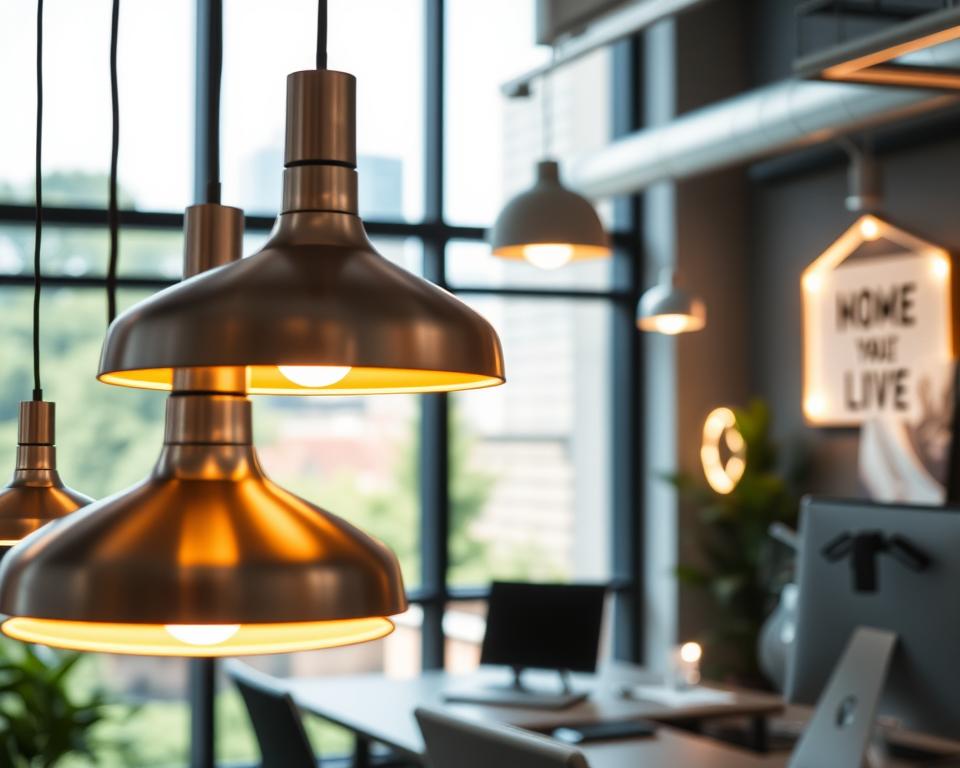
Tips for Maximizing Sunlight Exposure
To get more sunlight, I can move my desk closer to a window. Mirrors or reflective surfaces help spread the light around the room.
- Keep windows clear for the most sunlight.
- Use light-colored curtains or blinds to soften the light.
- Place mirrors opposite windows to bounce the light.
Balancing Natural and Artificial Lighting
Natural light is great, but it’s not always there, like at night or on cloudy days. Artificial light helps fill in the gaps. This way, I can keep a steady light level that helps me work well.
I use a variety of office lighting fixtures like LED lamps, overhead lights, and desk lamps. This creates a balanced and cozy lighting setup.
By mixing natural and artificial light, I make my workspace both productive and welcoming.
Color Temperature and Its Effects
Color temperature is key in office lighting, impacting my mood and work. It’s measured in Kelvin (K) and greatly affects my productivity and the atmosphere of my workspace.
The Science Behind Kelvin Ratings
The Kelvin rating system shows the color temperature of lighting. Warm white (2700K-3000K) gives a cozy feel, while cool white (3500K-5000K) is brighter and more energizing.
A warm white light is great for living rooms to relax. In offices, a cool white light boosts alertness and focus.
Choosing the Right Color Temperature for My Tasks
Choosing the right color temperature depends on my office tasks. For detailed work, a cooler color (4000K-5000K) is best. For creative tasks, a warmer color (2700K-3000K) is better.
For more tips, I can check BenQ’s guide on the best color temperature for office.
How Color Affects My Workspace Atmosphere
The color temperature of my office lighting greatly changes my workspace atmosphere. The right color can improve my mood, reduce eye strain, and make work better.
“The right lighting can transform a workspace, making it more inviting and conducive to productivity.”
Understanding color temperature effects helps me make my workspace both functional and comfortable.
Lighting Layout: Creating a Balanced Setup
Setting up balanced lighting in my office is key for both looks and function. A good lighting plan can really improve the feel and work quality of my space.
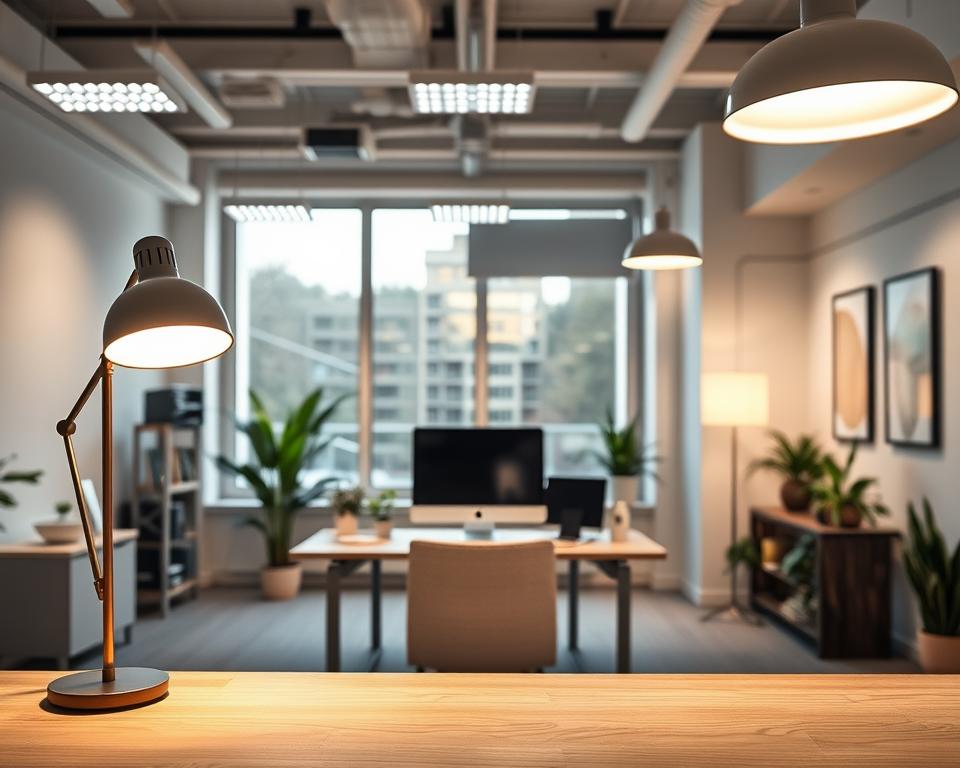
Key Principles for Office Lighting Layout
To get a balanced lighting setup, I must follow some important rules. First, I need to layer the lighting with ambient, task, and accent lights. This adds depth and interest to my office.
It’s also vital to make the lighting flexible and adjustable. Using dimmers or smart lights lets me change the light levels for different times and tasks.
Zoning My Office with Different Lighting
I divide my office into zones based on their use. For example, I use bright task lights for detailed work and softer ambient lights for relaxing or meetings.
- Task areas: Bright, focused lights boost productivity.
- Relaxation areas: Softer, warmer lights create a cozy feel.
- Meeting areas: Balanced lighting helps with both talking and working.
Common Mistakes to Avoid in My Setup
When setting up my office lights, I must avoid a few big mistakes. One major error is relying too much on one light source. This can make shadows harsh and the space feel unwelcoming.
Another mistake is ignoring color temperature. The wrong color can mess with my mood and work. Cool white is too harsh for relaxing, while warm white might not work for tasks.
By knowing these principles, zoning my office right, and avoiding common errors, I can make a balanced and useful lighting setup. This will improve my workspace.
Adjustable Lighting Solutions for Flexibility
Adjustable lighting solutions let me change my workspace for different tasks and preferences. This flexibility is key for a dynamic and productive work area.
Benefits of Adjustable Fixtures
Adjustable fixtures have many benefits, like directing light exactly where needed. This can cut down eye strain and boost comfort. Adjusting the lighting for the task at hand improves focus and productivity.
For example, when doing detailed work, I can tweak the fixture for more focused light. This reduces eye fatigue. This control is great in offices where tasks change often.
Smart Lighting Options for My Office
Smart lighting goes beyond adjustable by adding tech for remote control and scheduling. This lets me change my office lighting without getting up, and set routines for my work hours.
Some smart systems adjust color and brightness based on the time. For instance, cooler light in the day keeps me alert, while warmer light in the evening helps me relax.
Incorporating Floor and Table Lamps
Floor and table lamps add depth to my office lighting. They let me direct light where it’s most needed and can be moved as tasks change.
Table lamps are perfect for tasks needing focused light, like reading or writing. By placing them right, I create a cozy and well-lit space that fits my needs.
Personalizing My Office Lighting Setup
The right office lighting can change my workspace into a style reflection and boost my productivity. Personalizing my office lighting makes it both useful and beautiful.
Incorporating My Style and Preferences
Choosing fixtures that match my style is key. If I like modern, I pick sleek lights. For a traditional look, I go for ornate ones.
Key Considerations:
- Choose fixtures that match my office décor
- Consider the color temperature of the lighting
- Think about the adjustability of the lighting fixtures
Highlighting Artwork and Decorative Elements
Lighting can make my artwork stand out, making my office look great. Accent lighting adds depth and beauty.
Accent lighting ideas:
- Use track lighting to highlight artwork
- Install picture lights above framed pieces
- Employ floor lamps to create a cozy reading nook
Creating a Welcoming Atmosphere
To make my office welcoming, I mix different lights. This creates a cozy feel. It’s all about layering lights.
| Lighting Type | Purpose | Examples |
|---|---|---|
| Ambient Lighting | Provides overall illumination | Ceiling fixtures, LED panels |
| Task Lighting | Illuminates work areas | Desk lamps, under-cabinet lighting |
| Accent Lighting | Highlights decorative elements | Track lighting, picture lights |
By carefully choosing my office lighting, I make my work space better. It’s now both productive and fun.
Maintenance Tips for My Office Lighting
Keeping my office lighting in top shape is key to a great work environment. Simple habits can make a big difference. This way, my workspace stays bright and efficient.
Keeping Bulbs and Fixtures Clean
Dust and dirt can dull bulbs and fixtures. Regular cleaning boosts their performance. Always switch off the power before you start cleaning to stay safe.
For glass or plastic covers, a damp cloth works well. For tough stains, a mild soap solution is better. Make sure to dry everything well to avoid water marks.
Regular Checks for Efficiency
Regular checks catch problems early. I should look for worn-out bulbs and loose fixtures. This keeps my lighting running smoothly.
| Check | Frequency | Action |
|---|---|---|
| Bulb Inspection | Monthly | Replace dim or flickering bulbs |
| Fixture Security | Quarterly | Tighten any loose fixtures |
| Cleaning | Quarterly | Clean bulbs and fixtures |
When to Replace Lighting Fixtures
Knowing when to update my lighting is important. If fixtures are old, damaged, or don’t fit my needs, it’s time for a change.
Signs that it’s time to replace include:
- Frequent bulb replacements
- Visible damage to the fixture
- Incompatibility with new lighting technologies
Choosing new fixtures, I should look for modern, efficient options. LEDs are a smart choice because they last long and save energy.
By following these tips, I can keep my office lighting perfect. This improves my work experience greatly.
Future Trends in Office Lighting
I’m excited to see what the future holds for office lighting. The industry is moving towards greener and more tech-savvy options. I’m looking forward to adding these innovations to my workspace.
Sustainable Lighting Choices
Eco-friendly lighting is gaining popularity, with LED bulbs and energy-saving fixtures at the forefront. These choices help reduce my environmental impact and cut down on energy costs. Using smart lighting controls can also make my office lighting more efficient.
Smart Lighting Systems
Smart office lighting is changing how I work. It lets me control the lighting levels and schedules from anywhere. This boosts my productivity and could save a lot of energy, which is good for the planet.
Keeping up with office lighting trends helps me create a modern and efficient workspace. Whether it’s eco-friendly options or smart systems, I’m sure my office will stay productive and welcoming.