

A staggering 40% of employees feel tired or have low energy at work. This is often due to poor workspace lighting. Adding daylighting solutions to office design can greatly improve well-being and productivity.
Using natural illumination can make your office brighter and more productive. It benefits both employees and the company.
Key Takeaways
- Improved employee well-being through daylighting solutions
- Increased productivity with proper workspace lighting
- Enhanced overall work environment
- Better work-life balance
- Reduced eye strain and fatigue
The Benefits of Natural Light in Workspaces
Spending more time indoors makes natural light in workspaces even more important. It boosts mood, motivation, and productivity. It also improves overall well-being.
Boosts Employee Mood and Motivation
Natural light can greatly improve mood and motivation. Offices with lots of natural light have happier, more motivated employees. This is because natural light releases serotonin, which helps control mood.
Increases Productivity and Focus
Natural light also boosts productivity and focus. Offices with plenty of natural light help employees stay on task. They perform better and are more productive than those in dimly lit spaces.
Enhances Well-being and Health
Natural light is key for employee well-being and health. It reduces eye strain, improves sleep, and strengthens the immune system. By adding natural light to offices, employers create a healthier work environment.
| Benefits of Natural Light | Description | Impact on Employees |
|---|---|---|
| Boosts Mood and Motivation | Triggers release of neurotransmitters like serotonin | More positive outlook, motivated employees |
| Increases Productivity and Focus | Helps employees stay focused, avoid distractions | Better performance, increased productivity |
| Enhances Well-being and Health | Reduces eye strain, improves sleep quality | Healthier work environment, supported employee well-being |
Designing an Office for Natural Light
Creating an office that uses natural light well is key for a productive and healthy work place. We see that many factors are important for a well-lit office.
Choosing the Right Location and Layout
The first step is to pick a spot that gets lots of daylight. If that’s not possible, design the office layout to spread light around. Place workstations near windows and use mirrors to reflect light further into the office.
Studies show workers in offices with natural light are 15% more productive than those without. This shows how important strategic planning in office design is.
Using Glass Walls and Open Spaces
Commercial spaces with lots of natural light often have glass walls and open layouts. Glass walls help light spread deeper into the office. This design makes the space brighter and encourages teamwork among employees.
“The use of glass walls in office design has been shown to improve employee satisfaction and productivity by creating a more open and airy environment.”
Integrating Windows and Skylights
Windows and skylights are essential for office design with natural light. Place windows to catch the best daylight and use skylights where windows can’t be. For more tips on using natural light, check out 4 ways to maximize natural light in your office.
| Design Element | Benefit |
|---|---|
| Glass Walls | Enhances natural light distribution and fosters openness |
| Skylights | Provides natural light in areas without windows |
| Reflective Surfaces | Helps to bounce natural light deeper into the office |
Overcoming Common Challenges
Natural light in the workplace has many benefits. But, we face challenges like glare, heat, privacy, and sound issues. We need to design workspaces that use natural light well and solve these problems.
Addressing Glare and Heat Issues
Managing glare and heat is a big challenge. Glare can make it hard to see and feel uncomfortable. Too much heat can raise cooling costs and lower productivity. Here are some solutions:
- Use window treatments like blinds or shades to control light.
- Try smart glass that changes from clear to opaque with a button.
- Install external shading devices like overhangs or louvers to block sunlight.
Ensuring Privacy and Acoustic Comfort
Open, light-filled spaces are great for teamwork and creativity. But, they can also hurt privacy and acoustic comfort. Here are ways to fix this:
| Strategy | Description | Benefits |
|---|---|---|
| Private Workrooms | Areas for focused work or private talks. | More privacy, less distraction. |
| Acoustic Panels | Materials that soak up sound around the space. | Less echo, clearer speech. |
| Flexible Layouts | Furniture that can change with the work needs. | More flexibility, adapts to work styles. |
With these strategies, workspaces can enjoy natural light’s benefits without its downsides. This creates a better, more productive, and green work place.
Incorporating Natural Light with Artificial Lighting
To get the most from natural light, it’s key to mix it with the right artificial lighting. This mix not only makes the workspace look better but also saves energy and is good for the planet.
Balancing Daylight with LED Solutions
LED lights are a top pick for offices because they save energy and are easy to adjust. When paired with natural light, they make a smooth and lively lighting setup. Here’s why balancing daylight with LED is a smart move:
- Energy Savings: Using natural light wisely means you need less artificial light, which saves energy.
- Improved Productivity: A bright, well-lit space, with both natural and artificial light, makes employees happier and more productive.
- Customization: LED lights can be changed in brightness and color to match the natural light at any time of day.
Using Smart Technology for Lighting Control
Smart lighting systems let you control the light in your office in real-time. They adjust based on how much natural light is around. This makes office lighting more efficient and effective.
Smart lighting has cool features like:
- Automated Lighting Control: Sensors change the artificial light based on the natural light level.
- Personalized Lighting: You can set the lighting to your liking, making your work area more comfortable and productive.
- Data Analytics: These systems give insights into how you use light, helping you use less energy.
By mixing natural light with artificial and using smart tech, offices can become greener, more comfortable, and more productive.
Creating Zones for Collaboration and Focus
Optimizing natural light in offices needs a careful plan. This plan should create different zones for different work styles. This way, businesses can boost employee productivity and job happiness.
It’s key to balance open areas for teamwork with private spots for focus. Open areas help teams work together and be creative. Private spaces give workers quiet time for deep work.
Open Areas Versus Private Spaces
Designing open areas should include features that encourage teamwork. Think about:
- Comfortable seating arrangements
- Flexible workstations
- Technology integration for easy communication
Private spaces, on the other hand, should reduce distractions. They should have:
- Soundproofing or quiet rooms
- Personalized workstations
- Simple decor to cut down on visual distractions
Strategic Furniture Placement
Placing furniture wisely is vital for effective zones in an office. It helps make the most of natural light. This boosts the office’s design benefits.
For example, putting workstations near windows lets in more natural light. Using glass walls or partitions spreads light to other areas.
By designing zones for teamwork and focus, and placing furniture smartly, businesses can make a better work place. This place is more productive and fulfilling for everyone.
Biophilic Design Elements to Enhance Natural Light
Biophilic design brings nature into our offices, making them bright and beautiful. It connects us with the outdoors, boosting our well-being and work performance.
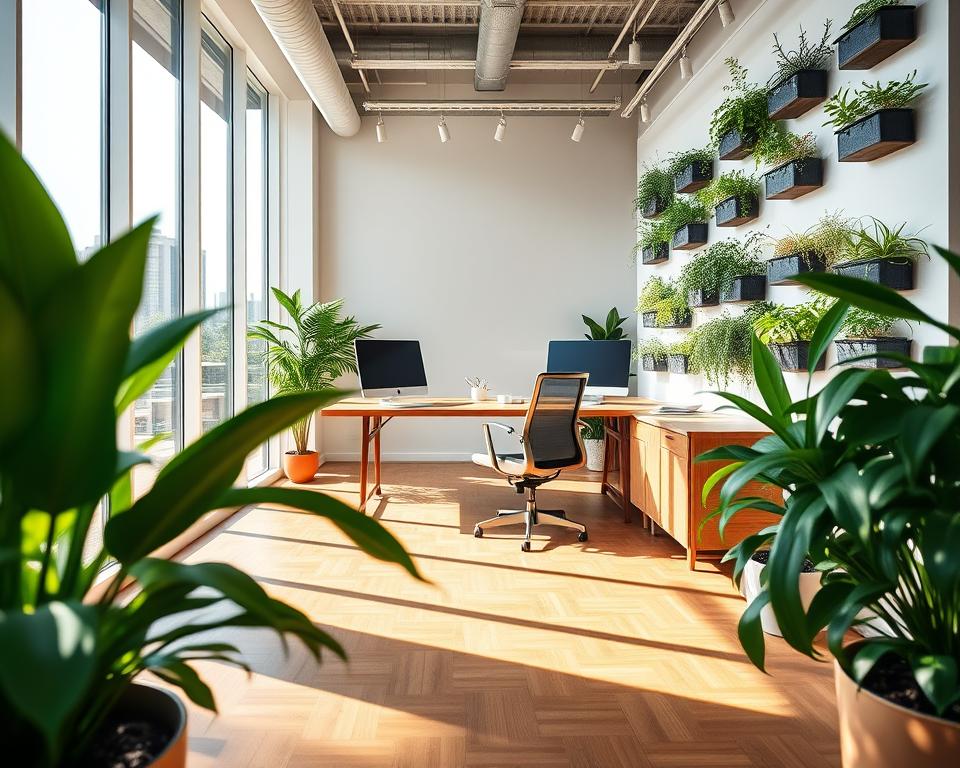
Incorporating Plants and Nature
Adding plants and natural elements is a great way to start. Greenery makes spaces look better and improves air quality. It also helps employees relax.
Choose plants that do well indoors and don’t need much care. Snake plants and spider plants are good choices.
Using wood, stone, or water features also enhances biophilic design. A wooden wall or a stone feature adds warmth and texture. It makes the space feel closer to nature.
Using Natural Materials and Colors
Natural materials and colors are key in biophilic design. Earth tones like greens, blues, and neutrals create a soothing atmosphere. Materials like reclaimed wood, bamboo, or low-carbon concrete add depth and character.
When picking colors, think about your office’s surroundings. Near forests, use greens to connect indoors and outdoors. Near water, choose blues and whites to feel like you’re by the sea.
By using biophilic design, we make our offices brighter and more engaging. It helps us work better and stay healthy.
The Role of Office Windows and Treatments
Office windows and their treatments are key in balancing natural light with comfort and privacy. Creating workspaces that are both productive and welcoming is our goal. Understanding windows’ role and how to treat them is vital.
Selecting Appropriate Window Coverings
Choosing the right window coverings is key for controlling natural light in the workspace. Options include blinds, shades, curtains, and shutters, each with different light control, privacy, and looks. For example, roller shades are simple yet effective in managing light.
When picking window coverings, think about energy efficiency and durability too. Some materials can even insulate the office, cutting down on heating and cooling costs.
Energy-Efficient Windows for Optimal Light
Investing in energy-efficient windows is a big step towards better natural light in the office. Double or triple-glazed windows keep the office cooler in summer and warmer in winter. Plus, low-e coatings reflect infrared light, boosting energy efficiency.
Energy-efficient windows make the workspace more sustainable and comfortable. They help keep the indoor climate steady, boosting employee comfort and productivity.
By picking the right window coverings and investing in energy-efficient windows, businesses can make the most of natural light. This approach minimizes its drawbacks.
Real-Life Examples of Successful Designs
Companies are now focusing on the importance of natural light in workspaces. They’re changing their office designs to make the most of it. This isn’t just about looking good; it’s about making work healthier and more productive.
Case Studies from Innovative Companies
Many companies have added natural light to their offices, and it’s paid off. For example, Google’s offices are famous for their bright, open spaces. These spaces help teams work better together and think creatively.
Amazon has also made big changes. They’ve added big windows and skylights to improve how employees feel at work.
These companies show us that even tough spaces can be made better with natural light. The trick is to find a balance between light, privacy, and comfort.
| Company | Design Element | Benefit |
|---|---|---|
| Large Windows | Increased Productivity | |
| Amazon | Skylights | Enhanced Well-being |
| Microsoft | Glass Walls | Improved Collaboration |
Lessons Learned from Natural Light Transformations
Learning from these changes, we see a few key points. First, you need to really look at your space to see how you can improve it. Second, using smart glass can help control light and glare.
Also, getting your team involved in the design is important. They can tell you how they use the space and what they need to work better. This way, the design will really meet their needs.
By looking at these examples, businesses can learn how to add natural light to their offices. This leads to spaces that are more fun, productive, and healthy for everyone.
Engaging Employees in the Design Process
Getting employees involved in designing their workspace is key. It helps make a space that boosts their health and work performance. When people help decide on their work area, they feel more connected and happy.
Gathering Feedback and Ideas
It’s important to hear from employees about what they want in their office design. This includes how much natural light they prefer. You can use surveys, group talks, or one-on-one chats to get their thoughts.
- Surveys help find out what employees like in their workspace layout and lighting.
- Workshops or focus groups give more detailed feedback on design aspects.
- Suggestion boxes or online platforms let employees share ideas anytime.
Listening to what employees say helps find ways to make the work area better. This way, the whole work environment can improve.
Encouraging Personalization of Workspaces
Letting employees make their workspaces their own can really help. They can choose their decor or adjust the lighting to fit their needs.
Key Strategies for Personalization:
- Give guidelines, not strict rules, for decorating workspaces.
- Offer decor that matches the company’s vibe.
- Let employees pick their own setup, like standing desks or comfy chairs.
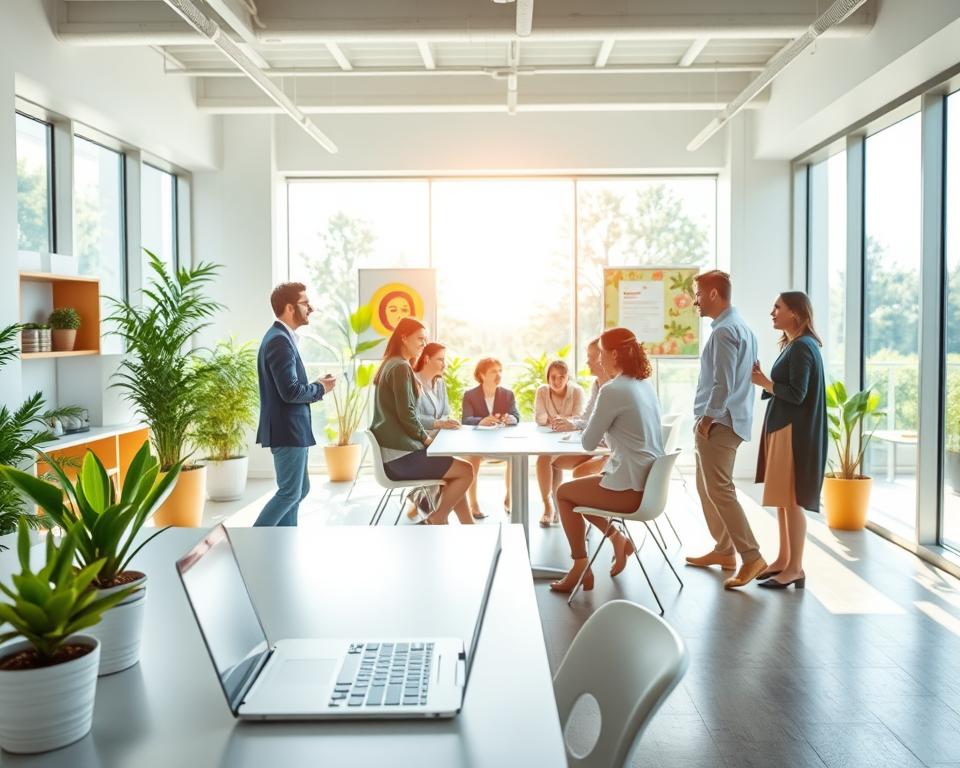
By letting employees help design and personalize their spaces, companies can make a natural light office. This office boosts productivity and supports employee well-being. It leads to a happier and more motivated team.
Tips for Maintaining Natural Light Over Time
To keep your office bright, you need simple yet effective strategies. It’s not just about letting sunlight in. It’s about making a healthy and productive space for everyone.
Regular Cleaning and Maintenance of Windows
Clean windows are key to keeping your office bright. Dirty windows block light, making your space feel dull. Regular cleaning is vital, including window sills and frames.
Here are some tips for easy window care:
- Set a schedule for window cleaning, every 2-3 months.
- Choose the right cleaning products to avoid streaks and residue.
- Fix any damaged seals or frames to prevent future problems.
Adapting to Seasonal Changes in Light
Natural light changes with the seasons. It’s important to adjust to these changes to keep your office bright. In summer, manage glare and heat. In winter, make the most of the limited sunlight.
Here are tips for seasonal adjustments:
| Season | Challenge | Solution |
|---|---|---|
| Summer | Glare and Heat | Use window treatments like blinds or shades to control light and temperature. |
| Winter | Limited Sunlight | Maximize existing light by keeping windows clean and using reflective surfaces. |
| Spring/Autumn | Variable Light Conditions | Adjust window treatments as needed to balance light and comfort. |
By following these tips, your office will stay bright and welcoming all year. This supports the well-being and productivity of your team.
Sustainable Practices for a Natural Light Office
A well-designed office that uses natural light can help our planet. By using green practices in our design, we can lessen our environmental harm. This also makes a healthier space for our employees.
Energy Conservation through Design
One key to a sustainable office is saving energy. We can do this by smartly placing windows and reflective surfaces. The U.S. Green Building Council says natural light can cut energy use by up to 20%. The National Renewable Energy Laboratory also found daylight can save a lot of energy.
To save energy through design, try these:
- Place windows to catch the most natural light
- Use skylights or solar tubes for more light inside
- Add light shelves or reflective surfaces to spread light deeper
Minimizing Environmental Impact
It’s also important to lessen our environmental harm. This means choosing eco-friendly materials and products. For example, picking materials with low VOCs can make the air inside better. As
“The buildings we design today will be the legacy we leave for tomorrow.”
– a guiding principle for architects and designers aiming for sustainability.
| Sustainable Material | Environmental Benefit |
|---|---|
| Recycled Glass | Reduces waste and saves raw materials |
| Bamboo Flooring | Fast to grow, needs less water and pesticides |
| Low-VOC Paints | Makes air quality better by cutting VOCs |
By using these green practices, offices can lessen their environmental impact. They can also make a healthier and more productive place to work. As we go on, finding new ways to use natural light, be green, and care for our employees is key.
Future Trends in Natural Light Office Design
Natural light will keep being key in office design as we move forward. The modern workplace is changing. So is how we use natural light.
Innovative Architectural Solutions
New designs are coming up to make the most of natural light. Big windows, solar tubes, and clerestory windows are getting popular. They make offices look good and help people work better.
These features are great for
enhancing productivity with natural light
Adapting to Shifts in Work Culture
Flexible work setups are changing office design too. With hybrid work models, offices are being remade. Natural light is important for making spaces welcoming and productive.
By following these trends, companies can make offices that look great and help employees do their best. This leads to a better and more lasting work environment.