

Did you know that adding indoor plants to your workspace can increase productivity by 15%? A study by the University of Exeter found this simple addition can greatly improve your work performance.
I’ve always been interested in how plants can positively affect our well-being and productivity. In this article, we’ll look at the benefits of indoor plants in the workplace. We’ll also share practical tips on how to add them to your office space.
By the end of this article, you’ll see how office plants can enhance your productivity. You’ll also learn how to pick the best plants for your workspace.
Key Takeaways
- Discover the productivity-boosting effects of indoor plants
- Learn how to choose the right plants for your office space
- Understand the importance of low-maintenance plants
- Find out how plants can improve air quality
- Get tips on incorporating plants into your workspace
Benefits of Having Plants in the Office
Office plants do more than just look good; they make the workplace better. By adding plants, employers can gain many benefits. These benefits help both employees and the office atmosphere.
Enhancing Aesthetics and Ambiance
Plants bring nature into the office, making it look better. They come in many shapes, sizes, and colors. This means you can pick plants that match your office’s style. Plants can make employees happier and make the office feel more welcoming.
Creating a Relaxing Environment
A Harvard Business Review study showed that offices with plants have happier employees. Plants help lower stress and anxiety by making the space calm. This can make employees more productive and happy.
| Benefits | Description | Impact |
|---|---|---|
| Aesthetic Appeal | Plants add color and texture to the office | Boosts morale and creates a welcoming atmosphere |
| Relaxing Environment | Plants reduce stress and anxiety | Improves productivity and employee well-being |
| Air Quality | Plants purify the air | Contributes to a healthier work environment |
Understanding the benefits of office plants helps employers make smart choices. Adding plants not only makes the office look better. It also makes it a healthier and more relaxing place for employees.
How Office Plants Improve Air Quality
Adding the right plants to our offices can greatly improve air quality. This makes our workspaces healthier. Office plants are known to purify the air we breathe.
Plants That Purify the Air
Some plants are better at removing pollutants from the air. NASA’s research shows that spider plants and peace lilies are top air purifiers. They can remove harmful substances from the air, making offices healthier.
Here are some of the best air-purifying plants:
- Spider plants
- Peace lilies
- Snake plants
- Dracaena
- Philodendron
| Plant | Air Purifying Ability | Maintenance Level |
|---|---|---|
| Spider Plant | High | Low |
| Peace Lily | High | Medium |
| Snake Plant | Medium | Low |
Understanding VOCs and Indoor Pollution
Volatile Organic Compounds (VOCs) are chemicals that evaporate easily. They can come from office furniture, cleaning products, and flooring. These chemicals can cause health problems like headaches and respiratory issues. Air-purifying plants can help reduce VOC levels and improve air quality.
For more on office plants’ benefits, check out Studio Forma’s article.
The Psychological Benefits of Office Plants
Office plants are more than just decorations. They also have many psychological benefits. They help make the workplace healthier.
Reducing Stress and Anxiety
Office plants can greatly reduce stress and anxiety. A study by the University of Queensland showed this. It’s key in today’s fast-paced work world.
I’ve seen how a plant can change a room. It makes it calm and peaceful. Adding plants shows employers care about their employees’ well-being. This can lead to happier workers and less turnover.
Enhancing Mood and Well-Being
Office plants also improve mood and well-being. Being around plants can make you feel better. This is because it connects us to nature.
Choosing the right plants is important. Pick ones that fit well indoors and don’t need much care. This makes them great for busy offices.
| Plant Type | Stress Reduction | Mood Enhancement |
|---|---|---|
| Snake Plant | High | Moderate |
| Spider Plant | Moderate | High |
| Peace Lily | High | High |
Knowing the benefits of different plants helps you choose the best ones. This can make your office a happier and more productive place.
Plants and Productivity: The Connection
Studies show that plants in the office boost employee productivity and improve the work environment. It’s key to know why plants have this positive effect.
Studies Supporting Increased Productivity
A University of Exeter study found that offices with plants see a 15% higher productivity rate. This is a big deal, showing the value of adding plants to workspaces.

To learn more about the office plant benefits, check out this article. It talks about how plants improve productivity and well-being.
How Plants Affect Focus and Concentration
Plants do more than just boost productivity. They also help employees stay focused and concentrated. By making the environment more natural and calm, plants reduce distractions. This lets employees concentrate better and stay productive all day.
| Productivity Factor | Offices with Plants | Offices without Plants |
|---|---|---|
| Employee Productivity | 15% higher | Baseline |
| Focus and Concentration | Improved | Reduced |
In summary, adding plants to the office can greatly improve productivity and focus. By understanding the benefits of office plants, companies can make their workspaces more efficient and effective.
Types of Office Plants Ideal for Workspaces
Office plants can make your workspace look better and healthier. By picking plants that fit your office, you improve both looks and health.
Low-Maintenance Plants for Busy Offices
Busy offices can benefit from easy-to-care-for plants. A survey by the National Gardening Association shows succulents are popular for their low-maintenance needs. Other good choices include:
- Snake Plants: They clean the air and grow well in little light.
- ZZ Plant: Needs water only sometimes and can handle different light levels.
- Pothos: Simple to care for and grows in many light conditions.
Plants That Thrive in Low Light
Not all offices get lots of sunlight. But, there are plants that do well in low light. This means every office can have plants. Some good ones are:
- Peace Lily: It can handle low light and cleans the air.
- Dracaena: Grows in low light and cuts down on indoor pollutants.
- Philodendron: It adapts to low light and brings greenery to your office.
Adding these plants to your office makes it more inviting and healthy. This boosts productivity and well-being, showing the office plants benefits.
The Role of Plants in Team Dynamics
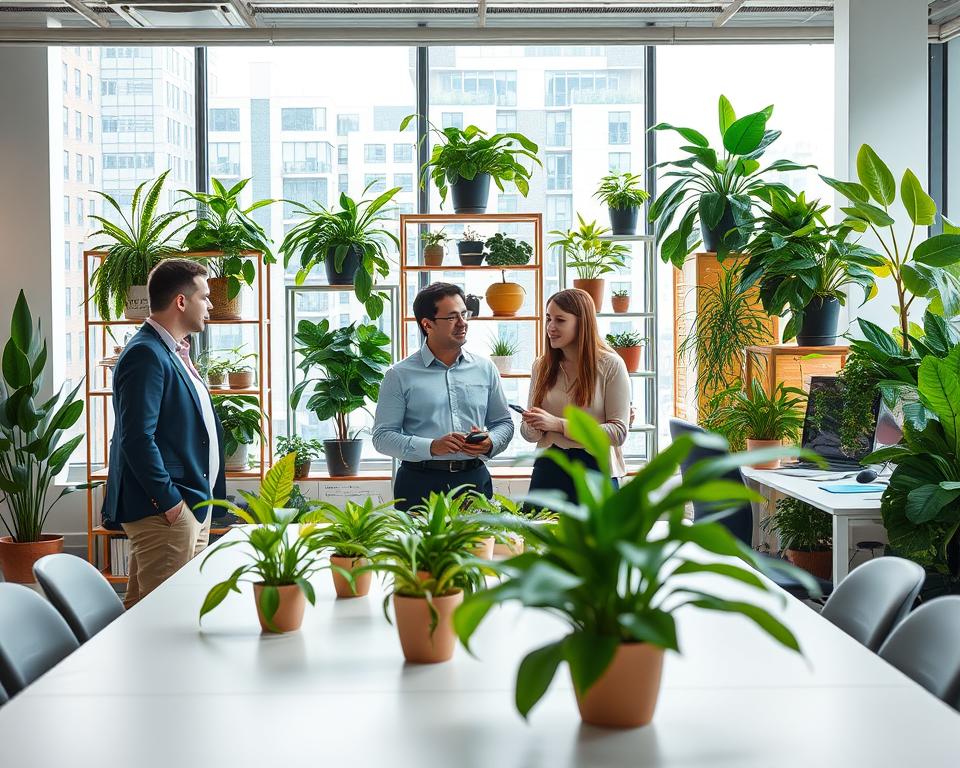
Exploring the benefits of indoor plants reveals their deep impact on teamwork and creativity. Adding plants to the office can make teams work better together and be more productive.
Studies show that offices with plants see more teamwork. A University of California study found that plants in the workplace boost team spirit.
Fostering Collaboration and Creativity
Plants are key in creating a team that works well together and thinks creatively. By bringing plants into the office, companies can encourage innovation and teamwork.
- Plants reduce stress and anxiety, making it easier to think creatively.
- They spark imagination and inspire new ideas.
- Plants in the office make people want to work together, building unity.
Building a Sense of Community
Plants also help build a sense of community at work. By adding plants to the office design, companies can make a welcoming space. This makes employees feel important and connected.
| Benefits | Description | Impact on Team Dynamics |
|---|---|---|
| Collaboration | Plants promote a relaxed atmosphere, encouraging teamwork. | Enhanced collaboration and creativity. |
| Community Building | Plants create a welcoming environment, making employees feel valued. | Stronger sense of community and unity. |
| Creativity | Plants stimulate imagination and inspire new ideas. | Increased innovation and productivity. |
Understanding how plants affect team dynamics helps businesses. They can use indoor plants to make their work environment more collaborative, creative, and community-focused.
Incorporating Plants into Office Design
Effective office design uses plants to improve the space. An Architectural Digest article shows plants can make the office look better. This makes the office more welcoming for everyone.
Choosing the Right Location for Maximum Impact
Choosing where to put plants is key. Plants that do well in low light go in dim spots. Plants needing sunlight go by windows or under grow lights.
Placing plants in busy spots like break rooms or meeting areas is smart. It makes the office look better and feel more relaxed.
Balancing Plant Placement with Office Function
Plants are great, but they must not get in the way. They should not block paths or mess with office gear. I suggest putting plants in corners or against walls.
It’s also important to pick plants that are easy to care for. Low-maintenance plants are best for offices with little time for plant care. This way, offices can enjoy plants without losing functionality.
Adding plants to office design improves looks and benefits. It boosts air quality and employee happiness.
Caring for Your Office Plants
Caring for office plants can seem hard, but it’s easy with a few tips. Proper care keeps your plants alive and healthy. This also boosts your workspace, including the reasons to have plants in the office.
Easy Plant Care Tips for Busy Professionals
Busy professionals might think office plants are too much work. But, with simple tips, you can keep them alive and well. Start by picking plants that don’t need much care, like succulents or snake plants. These plants can go a long time without water.
Watering is key, but don’t overdo it. The National Gardening Association warns against too much water. Check the soil by sticking your finger in it. If it’s dry, it’s time to water. Wait a bit longer if it’s not dry.
- Water your plants in the morning so they can drink all day.
- Use water that’s the same temperature as your room to avoid shocking the roots.
- Don’t get water on the leaves to stop fungal diseases.
Common Mistakes to Avoid
Don’t overwater and make sure your plants get enough light. Most plants need bright, indirect light to grow well. Some can handle low light, but most need more.
Don’t forget to fertilize your plants. A balanced fertilizer in spring and summer helps them grow. But, don’t fertilize in fall and winter when they need less.
Watch the temperature in your office too. Most plants like daytime temperatures between 65-75°F (18-24°C). Keep them away from heating vents, fireplaces, and drafty windows.
By following these tips and avoiding mistakes, your office plants will thrive. They’ll improve the air and look great. With a bit of care, your plants will make your work space better and more enjoyable.
Using Technology to Maintain Office Plants
Offices are now using more technology, including for plant care. This tech helps keep plants healthy and thriving at work.
Smart planters are a big step forward. They have sensors that check soil moisture, temperature, and light. This info helps keep plants in the best condition.
Smart Planters for the Modern Office
Smart planters change how we care for office plants. Forbes says they track soil moisture and light. This is great for busy people who can’t always check on their plants.
- Monitor soil moisture levels to prevent overwatering or underwatering
- Track temperature fluctuations to ensure optimal growing conditions
- Adjust light exposure to meet the specific needs of different plant species
These smart tools help offices be greener and healthier for everyone.
Apps for Monitoring Plant Health
There are also apps to help with plant care. They guide on watering, fertilizing, and pruning. This makes caring for plants easier for office staff.
| App Features | Description | Benefits |
|---|---|---|
| Watering Reminders | Customizable reminders based on plant type and environment | Prevents overwatering and underwatering |
| Plant Identification | Database of various plant species and their care requirements | Helps in choosing the right plants for the office environment |
| Care Tips | Personalized advice on plant care, including fertilization and pruning | Enhances plant health and longevity |
Using these tech tools, offices can make their plants healthier. This also makes the work environment better and more sustainable. As technology grows, so does the future of office plant care.
Office Plants as a Sustainability Strategy
Companies are working hard to lessen their impact on the environment. Office plants are a big part of making workspaces greener. They not only make the office look better but also help with sustainability.
Contributing to a Greener Workplace
Office plants are essential for cleaning the air and making it healthier inside. An article by GreenBiz says they help make workplaces greener. They cut down on carbon emissions and make a healthier space for workers.
Key benefits of office plants in sustainability efforts include:
- Reducing indoor air pollution
- Enhancing biodiversity in urban environments
- Promoting a culture of sustainability among employees
Engaging Employees in Sustainability Efforts
Office plants can also get employees involved in being green. When employees help take care of plants, it builds teamwork and responsibility. This makes everyone happier and more committed to being sustainable.
Strategies for engaging employees include:
- Creating a plant care committee
- Organizing workshops on sustainable practices
- Incorporating plants into team-building activities
By using office plants as a green strategy, companies can make a big difference. They create a healthier, greener workspace that’s good for both the planet and their workers.
The Future of Office Spaces with Plants
As we learn more about making workplaces better, adding plants is becoming key. Plants make offices healthier and more productive. They’re changing how we design offices for the better.
Emerging Trends in Biophilic Design
Biophilic design aims to bring nature into buildings. Fast Company says this trend is growing because plants improve air and look. Offices are getting greener, leading to more natural and eco-friendly designs.
Long-Term Benefits of Greener Workspaces
Greener offices offer many benefits. Plants make the air cleaner and spaces look better. They also help teams work better together. Adding plants to offices can make them more productive and sustainable.